
Every step, on our own floor.
Warping, weaving, stitching, finishing and packing run in sequence under one roof — which is what makes lead times a number we can actually promise.
Capacity you can plan around.
A complete production line from warping to packing, sized for wholesale and private-label volume orders.
Inside the workshop.
Every order runs through our own looms and stitching lines — no subcontracting, no black-box scheduling.
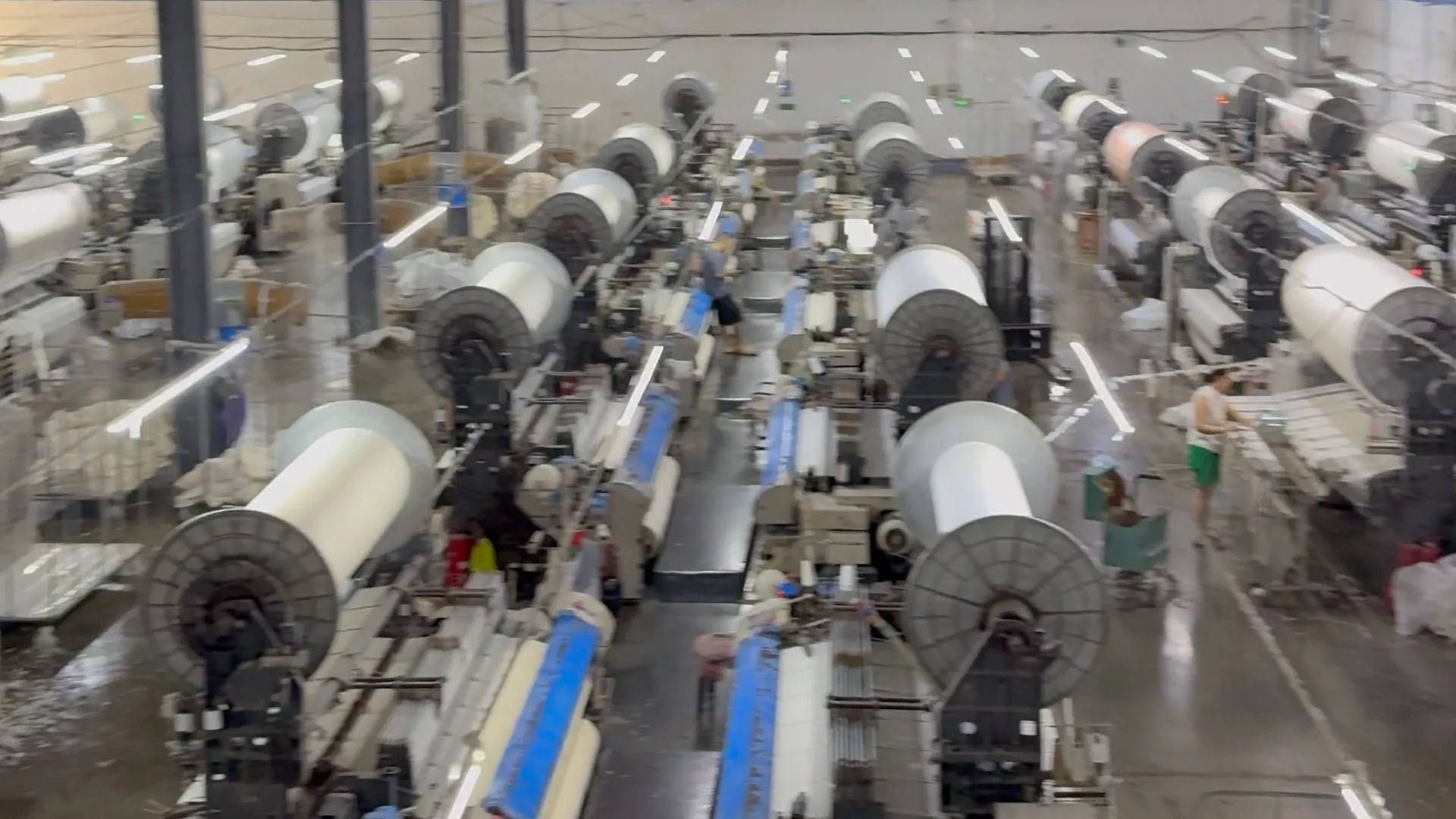
Weaving hall
Rapier looms run in parallel rows across the 7,000㎡ weaving floor.
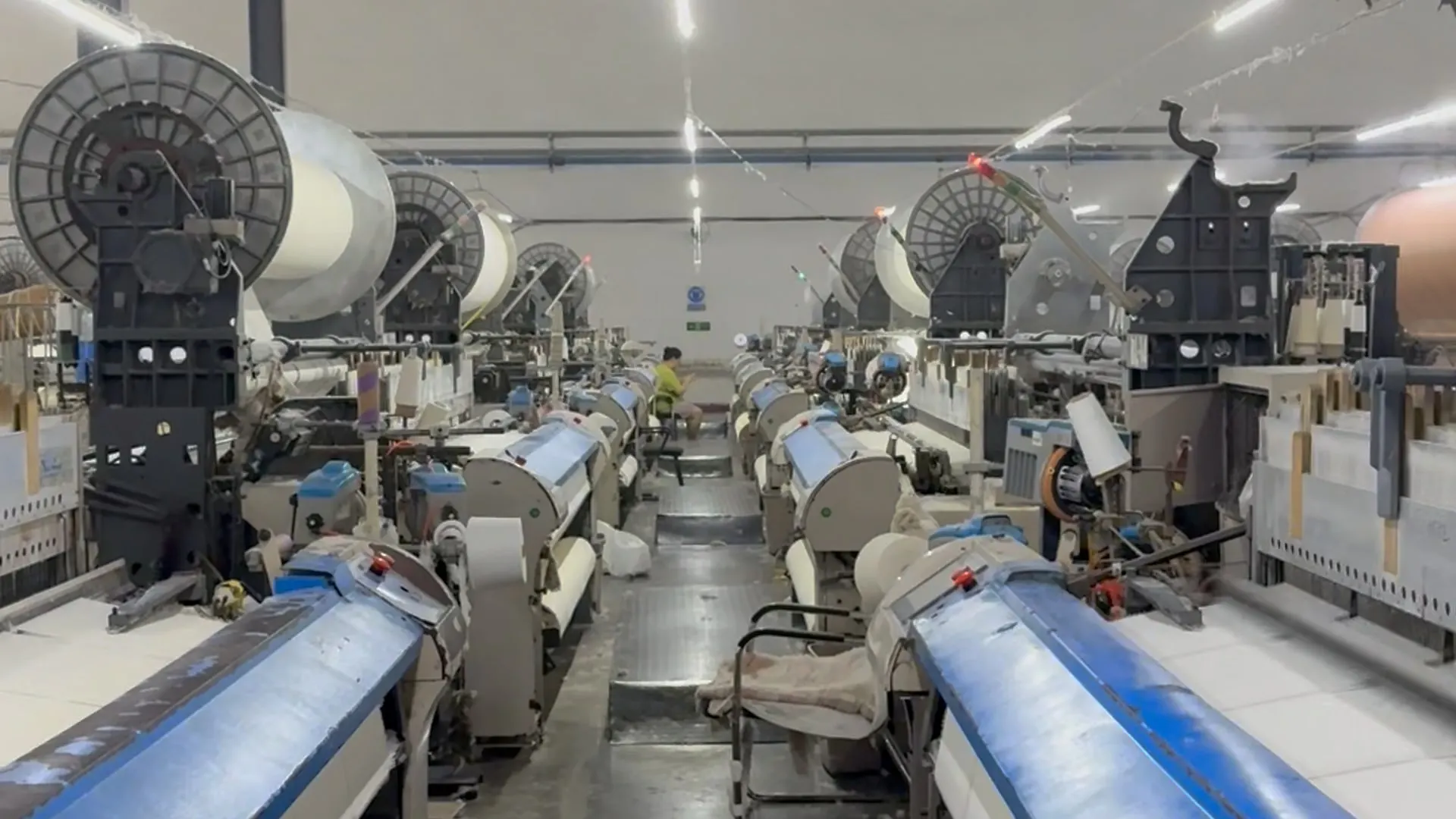
Loom aisle
Operators monitor each loom directly on the aisle floor.
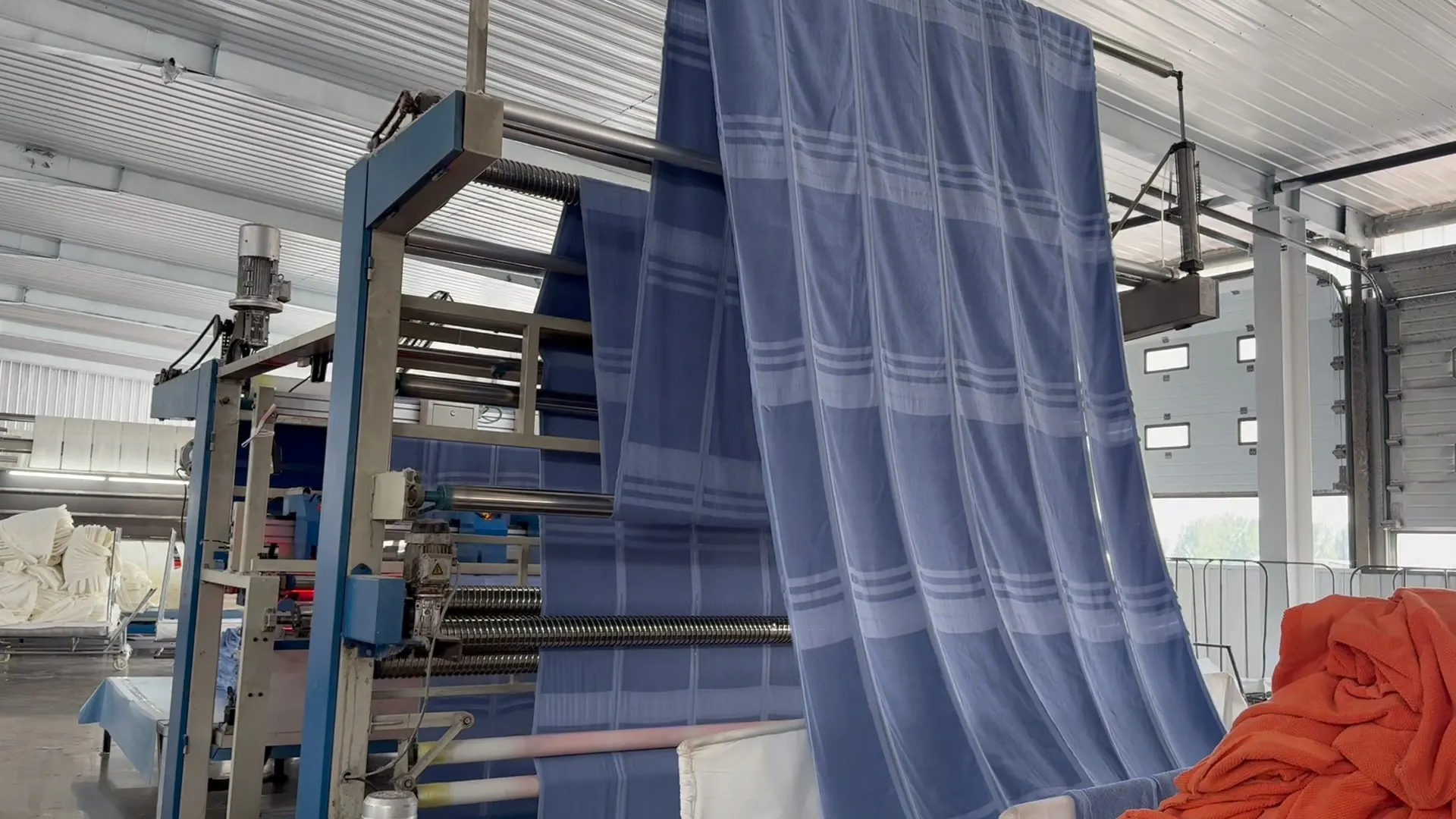
Automatic stitching line
Longitudinal and transverse sewing machines hem towels from roll to stack.
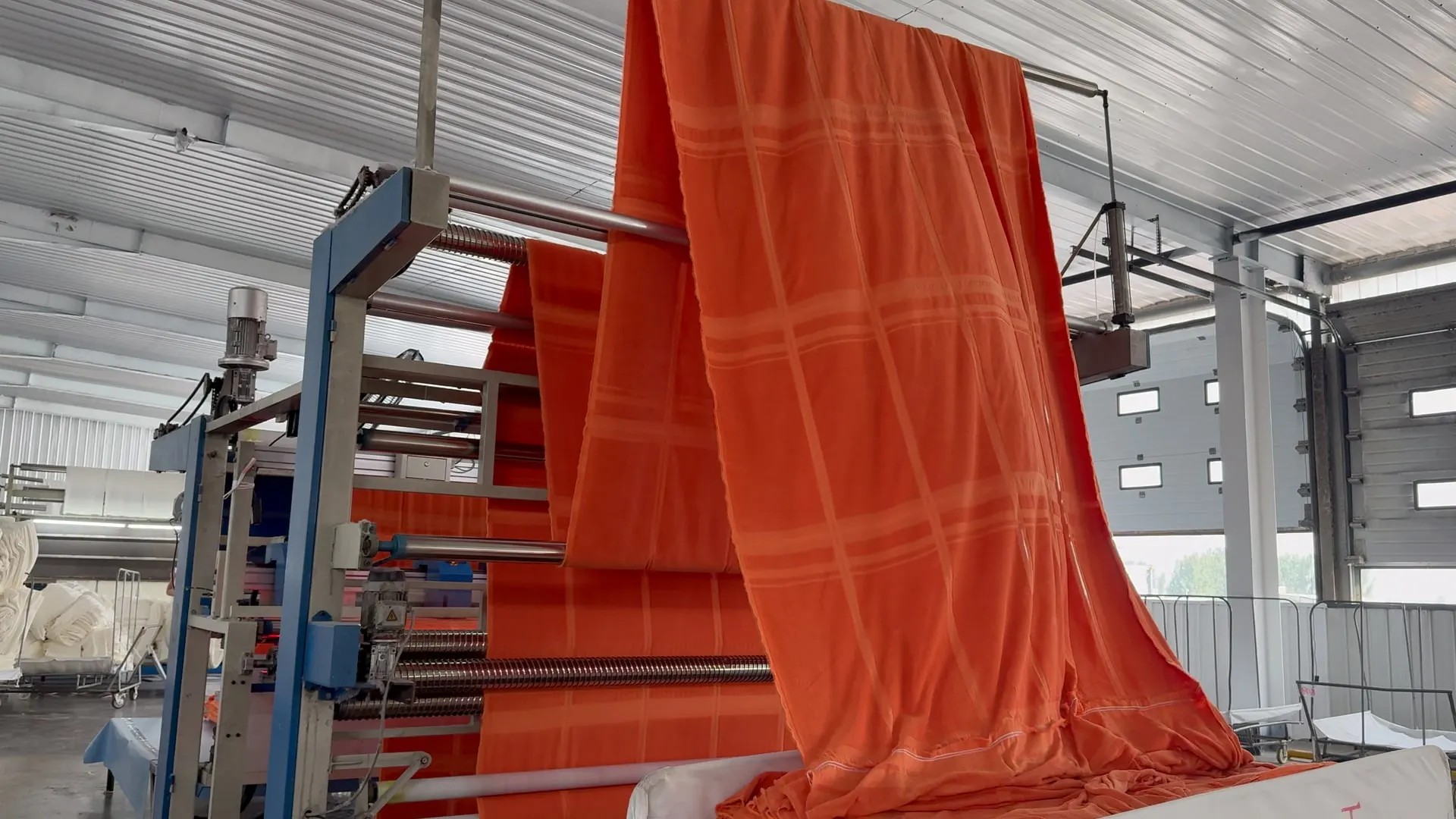
Finishing in sequence
The same line handles cotton terry in multiple colors and checks.
The production flow
- 01Warping
Yarn is wound onto warp beams under even tension, so the weave starts from a flat, consistent sheet rather than from slack or crossed ends.
- 02Weaving
Rapier looms form plain, jacquard, gauze and terry constructions in pure cotton and microfiber. Operators patrol the aisles and check each loom for broken ends and weft faults.
- 03Stitching
Automatic longitudinal and transverse sewing machines hem and join panels at a fixed pitch, with industrial sewing machines handling the details that still need a hand.
- 04Finishing
Washing, setting and inspection remove loom marks and confirm hand-feel and absorbency before anything is folded.
- 05Packing
Goods are counted, folded and packed to the carton specification agreed with the buyer, then staged for export documentation.
What we check, and when
Quality is inspected at four points rather than one, so a fault is caught at the step that caused it instead of at the loading dock.
- Incoming yarn — count, strength and shade checked against the sample
- On-loom — broken ends and weft faults cleared during weaving
- After finishing — hand-feel, absorbency and dimensional stability
- Before packing — size, weight, stitching and carton count